

A change of colour, a wreath of greenery, another candle burning each Sunday: Advent makes its presence felt through simple things. At the same time, the Church's readings, prayers and music take on a distinctive character. Together, these signs and symbols of Advent invite us to remain watchful and hopeful.
Above all, they help us enter the mystery we celebrate: Jesus Christ, who came among us in humility, is present to his Church and will come again in glory. As we attend to them, we learn how to wait for him, recognise him and welcome him.
Violet: preparing our hearts
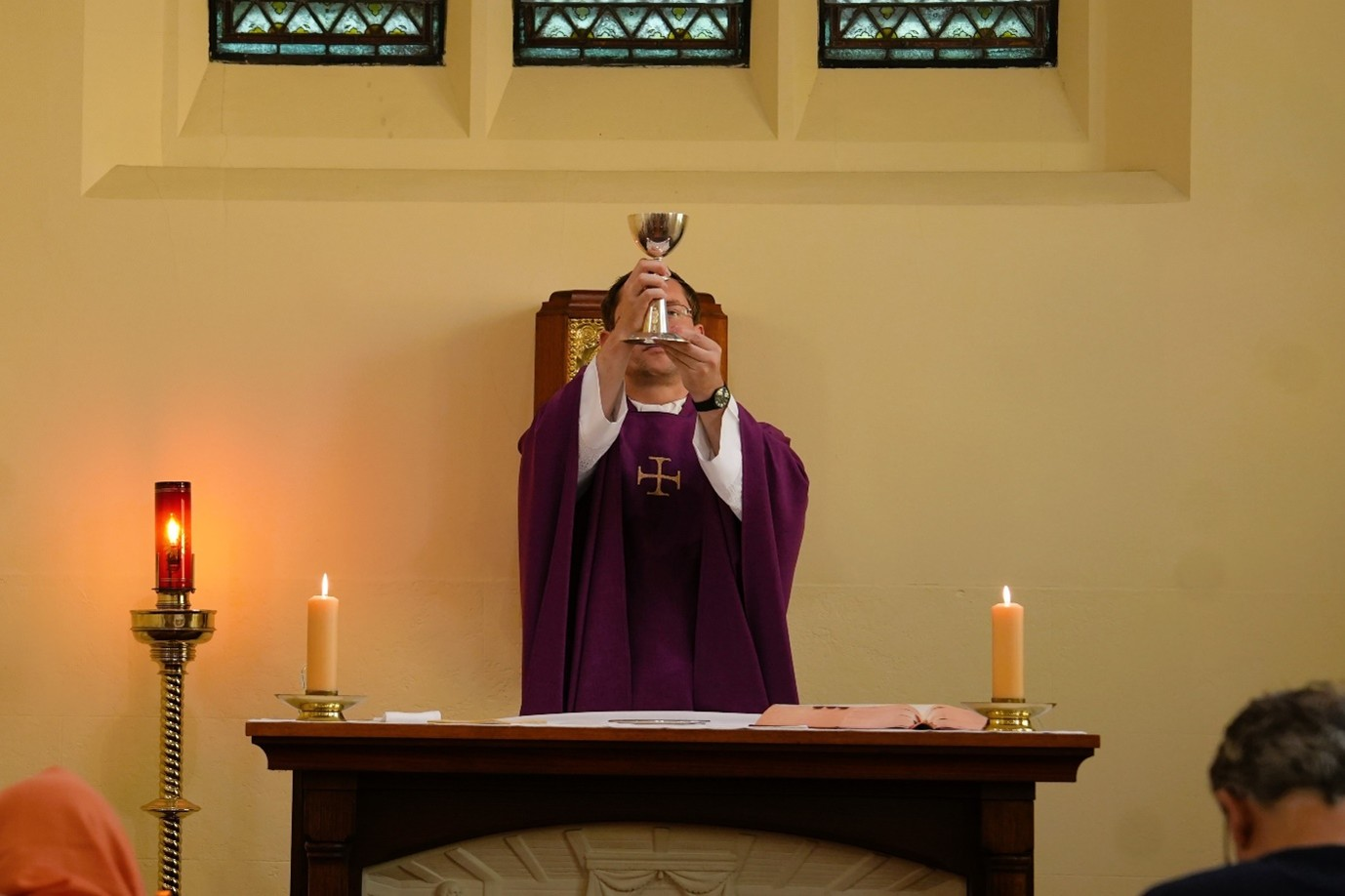
In the Roman Rite, violet is the usual liturgical colour of Advent. When it appears, it signals a change in the Church's prayer and draws our attention to preparation. Although the Church also uses violet in Lent as a sign of penance, in Advent the colour points instead to hopeful expectation of the Lord's coming. For this reason, Advent vestments should be a bright purple and should avoid symbols of the Passion. On the Third Sunday of Advent (Gaudete Sunday), priests may also wear rose vestments.
In turn, the colour helps create an atmosphere in which we can hear this invitation. As the priest puts on violet and the community gathers, we bring our distracted hearts before God and make ourselves ready to receive him.
The wreath: learning to wait together
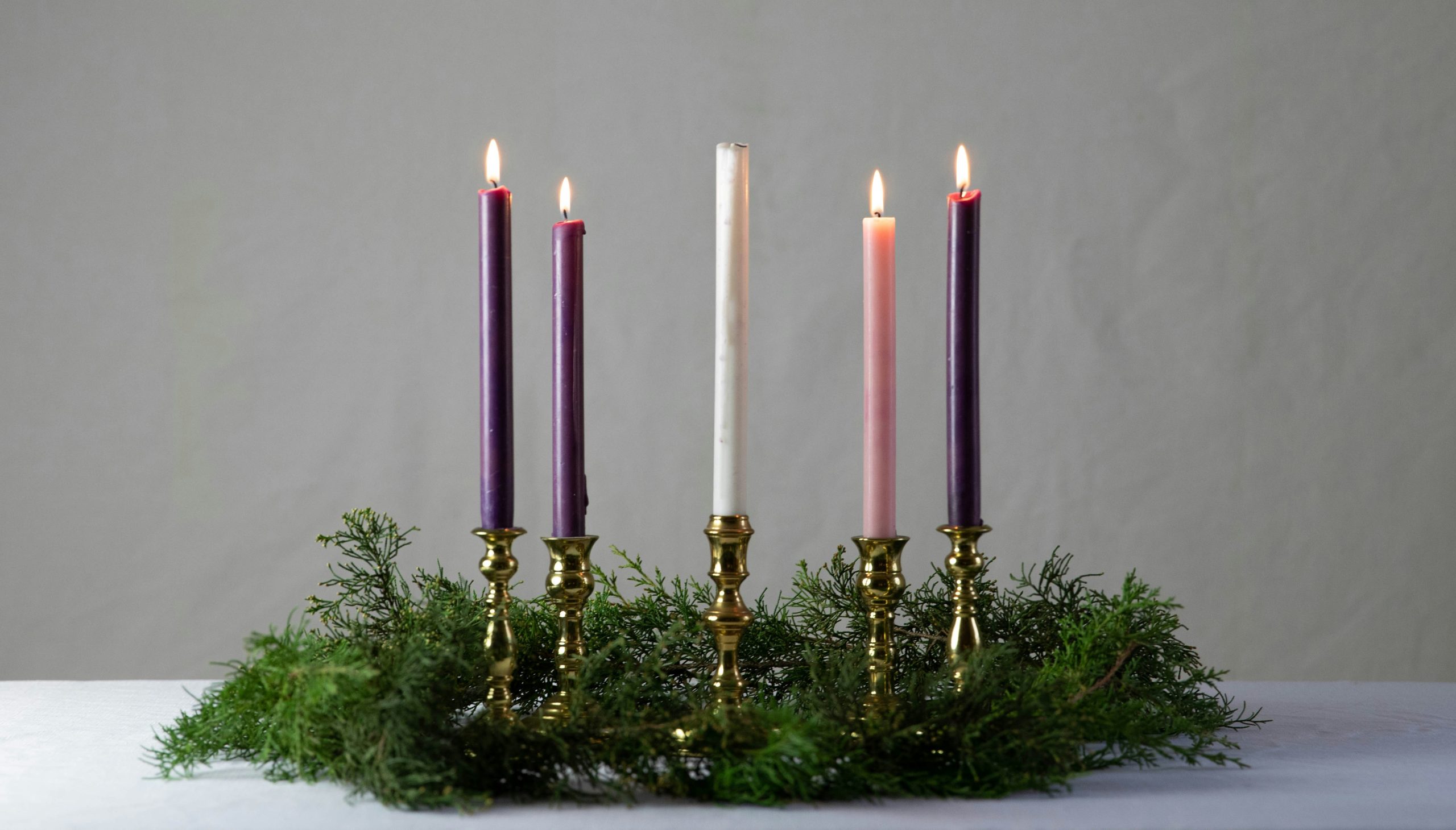
Of all the signs and symbols of Advent, the wreath is perhaps the most familiar. This cherished devotional practice supports prayer both in church and at home. Its four candles mark the four Sundays of Advent. Traditionally, the candles sit among evergreen branches, and together they give visible expression to the passing weeks and our growing expectation. Nevertheless, the wreath remains distinct from the central elements of the liturgy, especially the altar and the proclamation of Scripture. In other words, it supports the liturgy rather than competing with it.
The circle and greenery can suggest God's enduring love and the life he gives. Yet the wreath's deepest value emerges through its use. When we gather around it, light a candle and pray together, an object becomes an occasion for faith.
At home, this could be as simple as reading a few lines from Sunday’s Gospel together and praying for someone who needs hope. Families looking for a place to start can turn to The Summit’s Exploring the Word reflections or Melbourne Catholic’s Advent resources. In this way, these small moments help carry what we celebrate at Sunday Mass into the conversations, concerns and joys we share around the family table.
The candles: receiving Christ’s light
As Advent progresses, we light more candles each week. Their growing light directs our attention towards Christ, who enters the darkness of human life and brings salvation.
In a common arrangement, three candles are violet and one is rose, and we light the rose candle on the Third Sunday. Many people also give each candle a theme, such as hope (Week 1), peace (Week 2), joy (Week 3) and love (Week 4). In addition, some places add a white candle in the centre of the wreath to represent Christ and light it during the Christmas Octave. These themes can guide our reflection and, ideally, invite us to grow in these virtues as we prepare to welcome the Saviour.

Gaudete Sunday: rejoicing in the Lord
The Church calls the Third Sunday of Advent Gaudete Sunday. Gaudete is the Latin word for "rejoice". It is also the first word of the entrance antiphon at Mass, which calls the Church to rejoice. Likewise, the readings for this day all centre on joy.
Rose vestments and the rose candle make this invitation visible as Christmas draws closer. In this sense, Gaudete Sunday teaches us to receive joy as a gift rooted in the Lord's nearness. Even amid uncertainty, we can give thanks, encourage one another, rejoice and trust that Christ's saving love still holds our lives.
The prayers: making the Church’s hope our own
Beyond what we see, the signs and symbols of Advent also include what we hear. In fact, Advent's meaning becomes especially clear when we listen to the liturgical propers. First, the Collects at Mass gather the community's longing and ask God to prepare us for Christ.
Next, the two Prefaces of Advent, which come before the Eucharistic Prayer, unfold the season's movement. The first connects Christ's coming in humility with his future coming in glory. Then, from 17 December, the second draws us more closely towards his birth and recalls Mary and John the Baptist.
Similarly, listening attentively to the readings helps us pray with the Church. Gradually, we come to understand that preparing for Christmas also means learning to live in expectation of Christ's return. For this reason, preaching and catechesis during the season should give real attention to Christ's second coming, especially in the weeks before 17 December.
Restraint, song and the final days
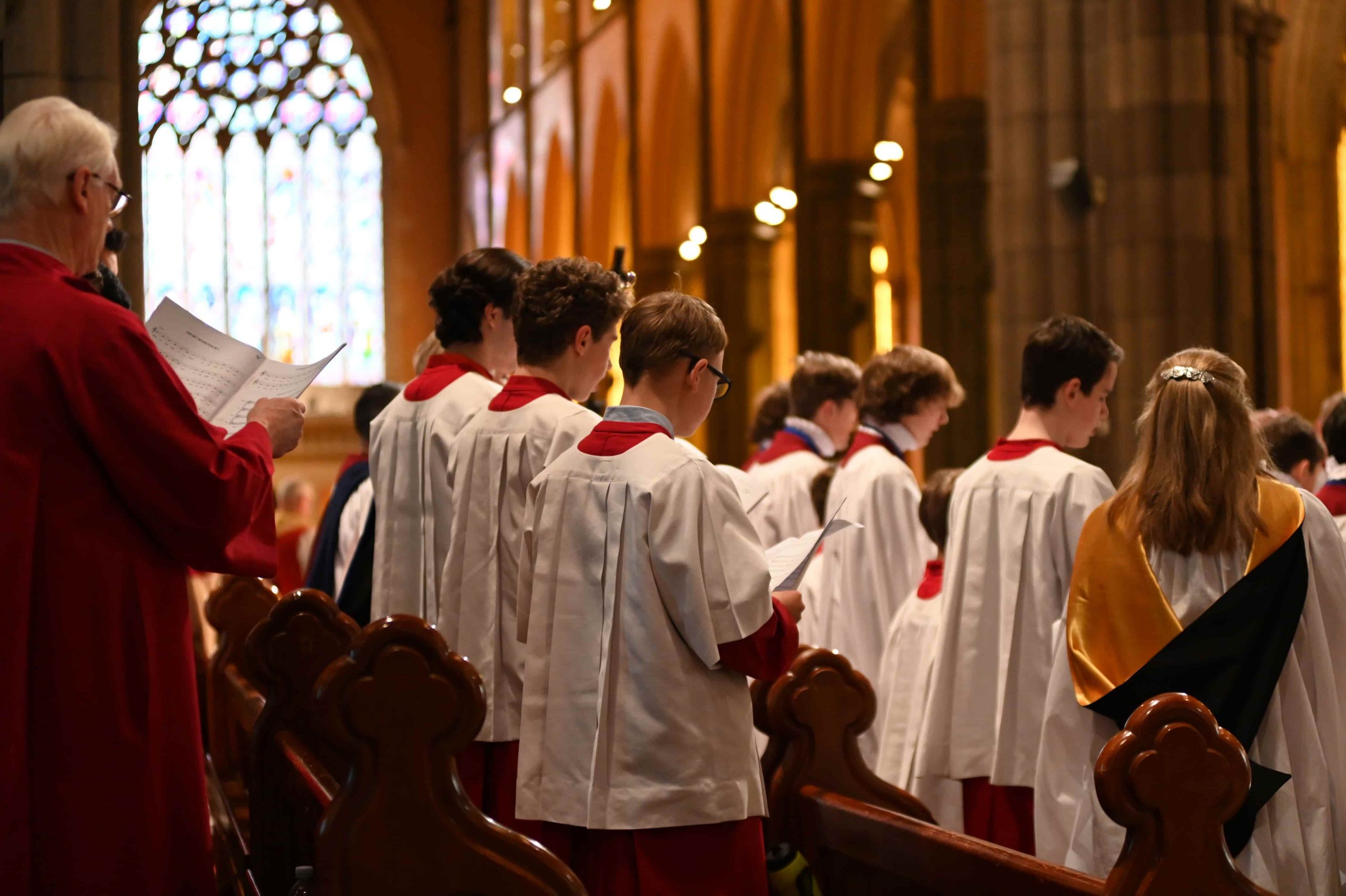
Although the Sundays of Advent take precedence over almost every other celebration, the Church omits the Gloria on them. Unlike in Lent, however, the Alleluia remains. The Church also uses flowers and instrumental music with moderation, so that the church's surroundings and sound express the season's sense of anticipation. As a result, these choices prepare us to receive the fuller celebration of Christmas with renewed attention.
From 17 to 24 December, Advent enters its final phase. The Missal and the breviary make this clear by providing special texts for these eight days before Christmas. During this time, the weekday Advent Masses take precedence over memorials of the saints, which the Church may observe only in a limited way, as commemorations.
The O Antiphons are especially worth noting here. The Church prays them at Evening Prayer from 17 to 23 December. Each antiphon addresses the Messiah by one of seven titles that come from the prophet Isaiah. Moreover, each of these Old Testament titles matches who Jesus was, what he said and what he did. The Old Testament passages give us insight into God's promises about who the Messiah would be and what he would do. Meanwhile, the New Testament passages show how Jesus fulfilled those prophecies. We also sing these titles in the hymn O Come, O Come, Emmanuel.
Although not everyone prays the Divine Office, the O Antiphons make a perfect basis for an Advent Bible study or small prayer group. Use the following table to explore these titles of Jesus.
| Date | English Title | Latin Title | Old Testament | New Testament |
| Dec 17 | O Wisdom | O Sapentia | Isaiah 11:2-3 | Luke 2:46-47 |
| Dec 18 | O Lord | O Adonai | Isaiah 33:22 | Matthew 21:9 |
| Dec 19 | O Root of Jesse | O Radix Jesse | Isaiah 11:1 | Matthew 1:1-17 |
| Dec 20 | O Key of David | O Clavis David | Isaiah 22:22 | Luke 1:32 |
| Dec 21 | O Radiant Dawn | O Oriens | Isaiah 9:2 | Matthew 24:29-30 |
| Dec 22 | O King of All Nations | O Rex Gentium | Isaiah 9:6 | Luke 1:33 |
| Dec 23 | O God is with us | O Emmanuel | Isaiah 7:14 | Matthew 1:22-23 |
Here is another piece of interesting trivia: if you take the first letter of each Latin title and read them in reverse order, they spell ERO CRAS, which is Latin for "Tomorrow I will come".
Living the signs and symbols of Advent
Finally, we can bring that longing into our own prayer. Whether we are singing with the parish or listening to the readings or praying in silence, Advent provides us the language to welcome the Lord. Ultimately, the signs and symbols of Advent bear fruit as we become more attentive to Christ and more ready to love those he places before us.